Thaddeus Phillips returns to Buntport for the World Premiere of ‘ArounD the WorlD in 80 ToyS’ before it heads to the Edinburgh International Fringe Festival and global tour.
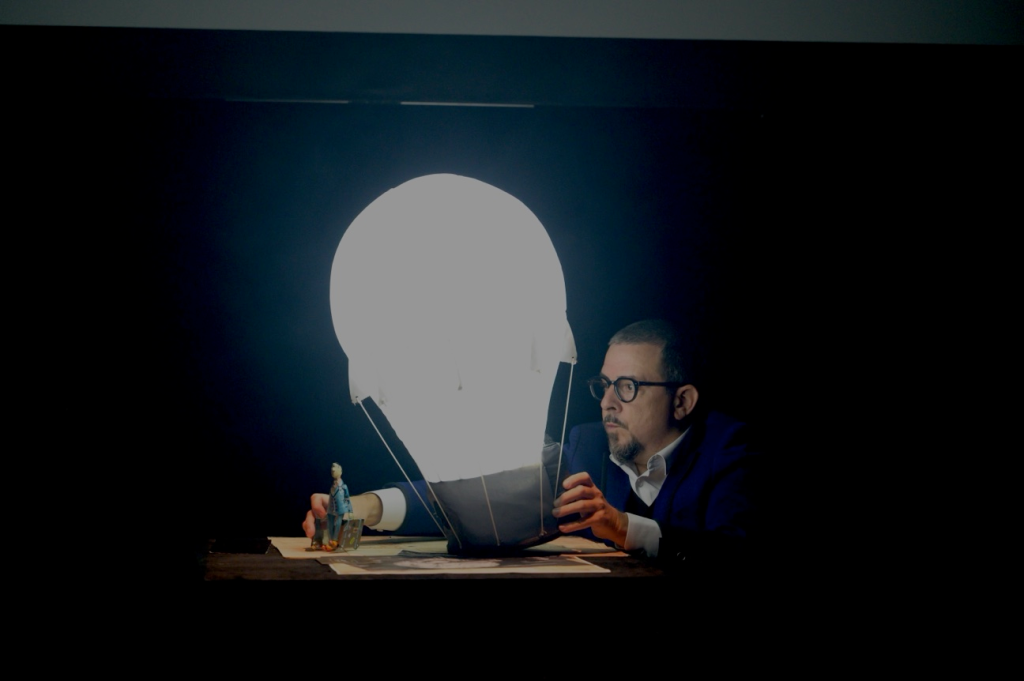
Thaddeus Phillips returns to Buntport for the World Premiere of ‘ArounD the WorlD in 80 ToyS’ before it heads to the Edinburgh International Fringe Festival and global tour.
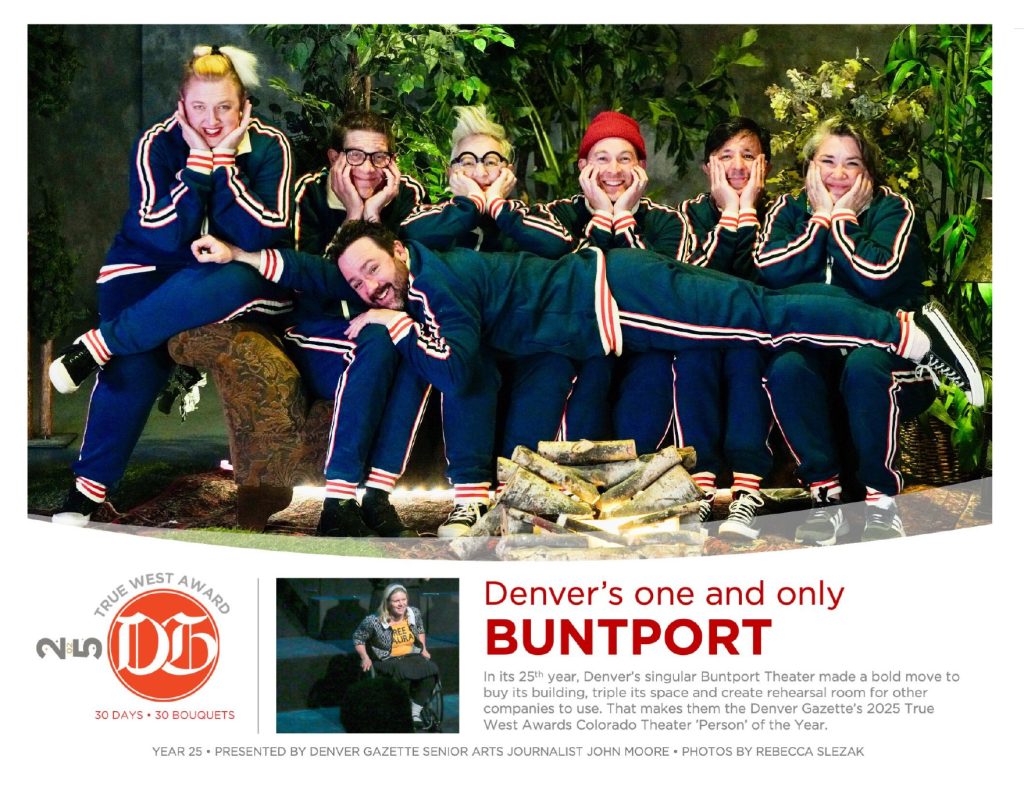
Colorado College pals made a bold move in 2025 to buy the Denver warehouse that has been its home for quirky, smart theater since 2001
YEAR 25 • PRESENTED BY DENVER GAZETTE SENIOR ARTS JOURNALIST JOHN MOORE • PHOTOS BY REBECCA SLEZAK
Here’s the thing about the Buntpoort Theater collective: There’s nobody like them. Not in Denver. Not in Colorado. Not in the United States. And they’ve been showing bedazzled audiences exactly why for 25 years now.
Or did you not just see them address the silliest aspects of both pet morbidity and the importance of well-chosen underwear in a Halloween reprise of the purr-fectly titled audience favorite “Edgar Allan Poe Is Dead and So Is My Cat”?
We learned in 2025 that these clever college pals, these creative unicorns, these quick-witted writing wizards who have collaboratively brought an astonishing 55 silly, smart, absurd and always original plays and musicals to theatrical life (along with hundreds of hours of other original programming) since 2001, are going to keep on doing what they do straight up until their performing days are over – hopefully many, many years from now.
Because in 2025, as the five remaining members of the original artist-driven ensemble straddle both sides of age 50, the Buntporters made a bold move to launch a $2.65 million capital campaing and buy the entire warehouse building that always has been their creative home at 717 Lipan St.
The purchase will allow the company to expand from its existing one-third of the 10,000 square-foot corner of the warehouse to full occupancy of the entire building, which will allow it to expand its commitment to community by making badly needed backstage space available to untold numbers of area arts organizations that need it.
At a time of their lives when others might be starting to wind things down, “we’re doubling down,” said ensemble member Erin Rollman.
“It’s a big deal for us to be doing this. It’s like we’re saying, ‘We’re going to be
here, and we’re going to have a place for other people to make work. We think it’s a big thing. And we’re happy if other people also think it’s a big thing, too.”
My, how lucky we are in Denver to have them.
On the just-completed Colorado Gives Day, Buntport’s fiercely loyal fan base sent the company an emphatic, $55,000 message of support for their capital campaign. And with that, the Buntporters crossed the halfway threshold, with $1.33 million now committed toward their five-year goal.
For the estimable ensemble’s entrepreneurial efforts to both secure their building and ensure they will be making fun stories for their audiences to enjoy well into old(er) age, the collective is today being named the Denver Gazette True West Awards’ 2025 Colorado Theater ‘Person’ of the Year.
“All of this makes me so happy, because I feel like Buntport is everything that the best theater should be,” said Regan Linton, former artistic director of Denver’s disability-affirmative Phamaly Theater Company, and in 2025,…Q.Q artistic collaborator with Buntport on her new play, “The Menagerist.” “I just think they do theater the way it should be done. And I think they’re one of Denver’s best-kept secrets.”

Members of the original Buntport Theater collective gathered on Dec. 6, 2025, for these photos featuring, clockwise from top letL Brian Colonna, Hannah Duggan, Erik Edborg, Matt Petraglia, Samantha Schmitz, Erin Rollman and Evan Weissman.(Rebecca Slezak for the Denver Gazette)
The core company – Brian Colonna, Hannah Duggan, Erik Edborg, Samantha Schmitz and Rollman, maintain a kind of delightful oblivion to the extent of the impact they have had on the local cultural landscape all this time. Or that they are now starting an empathic new phase that’s unheard of at this stage of any independent arts organization’s ecology and lifespan.
“Just today, I was asked: ‘Does this feel like as much of a completely ‘new phase’ for the company as it sounds like?”‘ said Rollman. ‘I said ‘Yeah, it does.’ But the part that feels crazy to me is that we’re too old for a new phase. I’m thinking, ‘I’m 50 – who the hell do I think I am?”
Colonna believes this milestone moment is an opportunity for the company to both reflect on the journey so far and gear up for what’s next.
“You know, from the start, we were told that the Denver theatergoing community wouldn’t really be supportive of original work,” he said. “But everyone has been so helpful to us from the very beginning. I mean, we had a meeting with (legendary theater producer) Henry Lowenstein on, like, Day 4 that we were in town. He was very practical and took us through numbers and told us, ‘This is how you get audiences.’ It was all very helpful.”
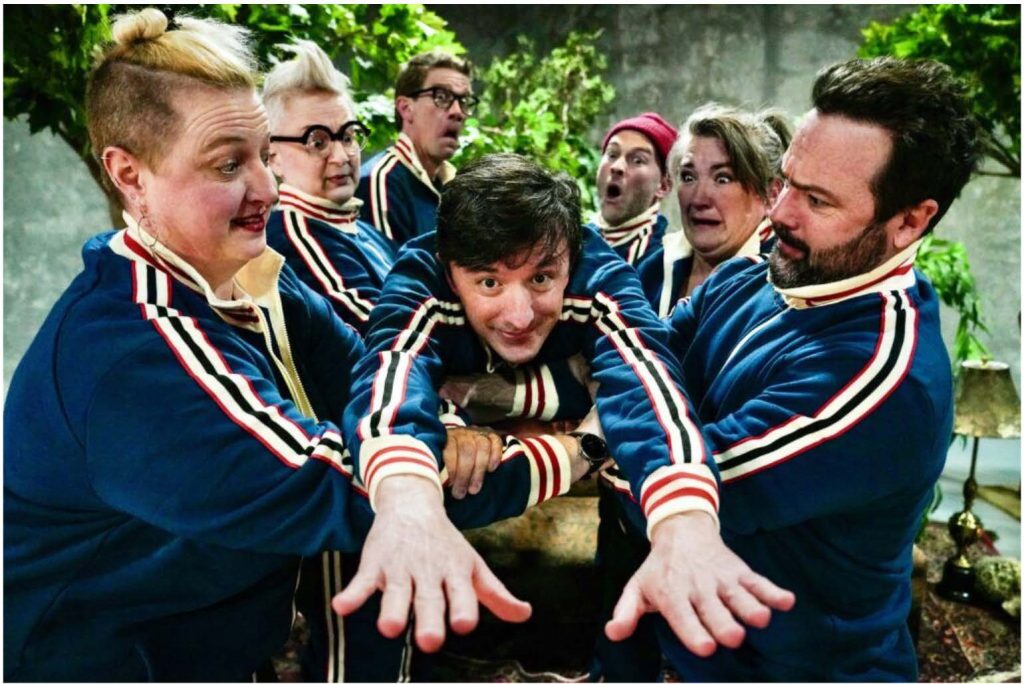
From left: Samantha Schmitz, Erin Rollman, Erik Edborg, Matt Petraglia, Evan Weissman, Hannah Duggan and Brian Colonna pose during a photo shoot at Buntport Theater on Saturday, Dec. 6, 2025 in Denver, Colorado. The company has made it for 25 years showing only original works and is being recognized as the Denver Gazette True West Awards’ 2025 Colorado Theater ‘Person’ of the Year. (Rebecca Slezak/Special to The Denver Gazette)
But this next leap requires the full faith and financial commitment of the theatergoing community itself, and that has these generally facile quipsters struggling to adequately convey their gratitude.
“People are being very generous with their money, and it’s really they who are buying the building, not us,” Colonna said. “That support is mind-blowing. When people tell us, ‘We have really fond memories of being here, so we are sending some money your way,’ that feels both humbling and exciting, because it’s an acknowledgement of all the time that has passed, and the work that has gone into it. But it also makes us excited for the work that is yet to come.”
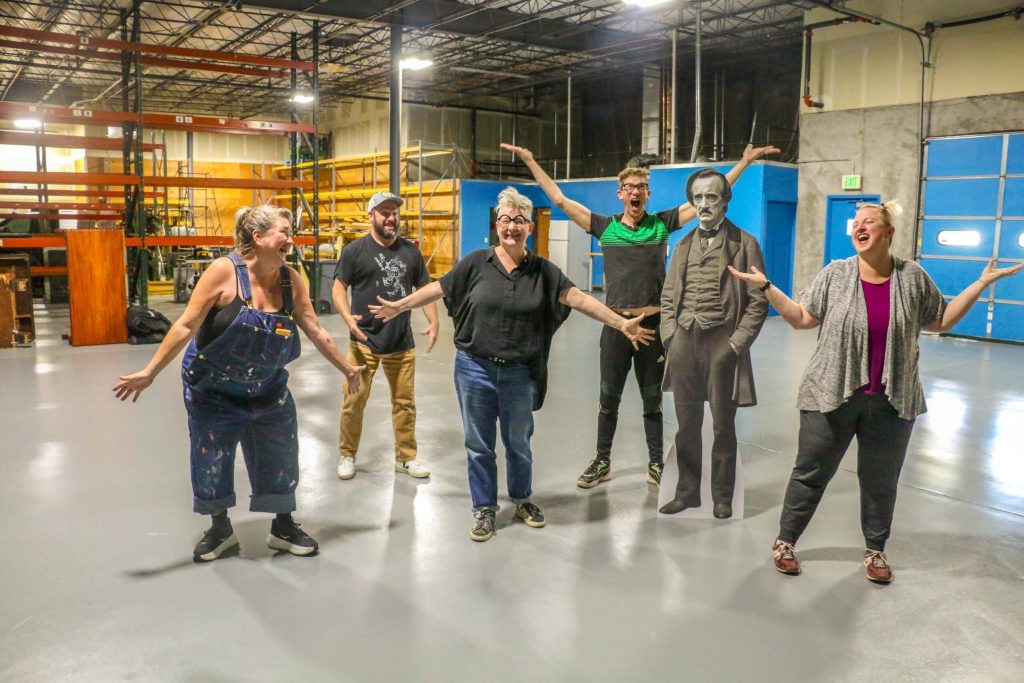
The Buntport Theater collective – Hannah Duggan, Brian Colonna, Erin Rollman, Erik Edborg, Edgar Allan Poe and Samantha Schmitz – are doing something rare: As they enter their 25th season of producing all-original stories, they are buying their home, expanding their space and welcoming the rest of the space-starved larger theater community to come along. JOHN MOORE/DENVER GAZETTE
Everything about the Buntport story is unheard of in the performing arts. Because everything about Buntport is as original as the company itself.
(The name, by the way, is a mangled reference to Kennebunkport, home of the Bush family presidential retreat in Maine.)
Imagine you’re a wide-eyed theater kid graduating from college (let’s say Colorado College!) 25 years ago, and you want to keep the good times rolling until the world inevitably forces you to settle down and get a job. So you and your six closest theater pals start a company. Nothing unusual there.
Only, you will never perform an existing play, ever, for the rest of your lives. So long, Shakespeare, Williams and Mamet. Instead, you are going to write and perform everything yourself. Not only that, you are going to go about it as a completely egalitarian mini-society where everyone in the company is equal. There will be no boss. Everyone will contribute to the writing.
Everyone will have a say in the direction. Everyone will build the sets and hang the lights. Everyone will be paid the same. And at the end of the day, everyone will take turns cleaning the toilets and taking out the trash.
And it will work.
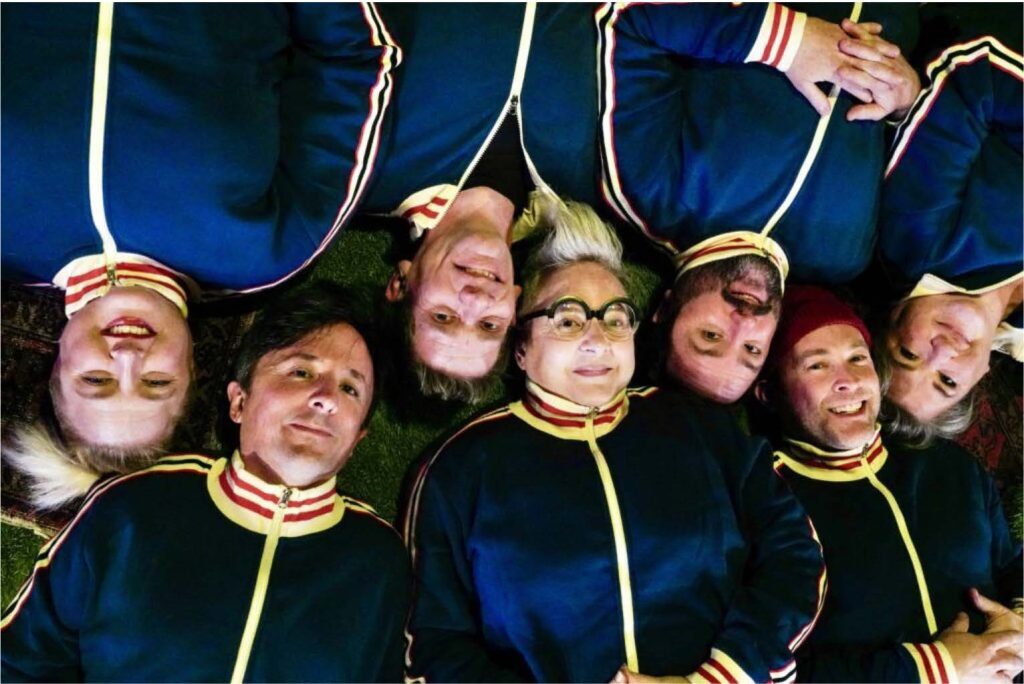
From left: Samantha Schmitz, Matt Petraglia, Erik Edborg, Erin Rollman, Brian Colonna, Evan Weissman and Hannah Duggan pose during a photo shoot at Buntport Theater on Saturday, Dec. 6, 2025, in Denver, Colorado. The company has made it for 25 years performing only original plays in creates in collaboration, and is being recognized as the Denver Gazette True West Awards’ 2025 Colorado Theater ‘Person’ of the Year. (Rebecca Slezak/Special to The Denver Gazette)
We’re talking low-key, yet truly radical collaboration here, the kind of social experiment that has been repeatedly proven to be unsustainable. Except here.
There are plenty of companies around the country that create original plays. But they don’t average two to three full, original works every year for a quarter century. And they don’t do it with artistic continuity over decades.
Elsewhere, ensemble members come, they go, and new members take their places. “But we’ve never heard of another company that does things quite the same way we do,” said Colonna. “I do think it is probably unique.”
Think about a comedy factory like Second City in Chicago. It’s had hundreds, maybe even thousands of members. Buntport has had seven.
Marriage is no excuse for getting out. No, the only way out of Buntport is to have a kid. (Two of them, Matt Petraglia and Evan Weissman, have.)
The Buntporters are ridiculously smart people, so they were bound to lose a few to an outside world that – news flash – generally compensates workers better than a grassroots, self-sustaining local theater company.

Erin Rollman, Samantha Schmitz, Erik Edborg, Evan Weissman, Brian Colonna, Hannah Duggan and Matt Petraglia pose during a photoshoot at Buntport Theater, Saturday, December 6, 2025 in Denver, Colorado. The company has made it for 25 years showing only original works and are recognized as Colorado Theater’s final “Person” of the Year award. (Rebecca Slezak/Special to The Denver Gazette)
Petraglia left in 2007 and is now raising a family in Greeley while working as a QC Chemist at IEH Laboratories. Weissman, also a married father, left Buntport in 2012 to become the visionary founder of Warm Cookies of the Revolution. That is a unique “civics health club” that has encouraged more than a million people to participate in important local issues in fun and meaningful ways. They both remain part of the company’s essential DNA.
“First and foremost, these people are the most creative and interesting and inspirational people in my life,” Weissman said. “In the time that I was here, I learned about getting along with people and how you build things together. My time here gave me the confidence to think that I might be able to do something new and weird and different. I never could have been a major part of any kind of art-scene world if not for Buntport.”
“If I may,” Rollman interrupted,”… you would be a shell of a human being if not for Buntport.”
(Editor’s note: You should know that, as in most families, any hint of public earnestness is immediately pounced on like blood in the water.)
“Oh yes, thank you – the words wouldn’t come,” said Weissman, instinctively jumping on the bit. “Yes, ‘shell’ was the word that I was looking for. If not for Buntport, I would be a shell of a human being.”
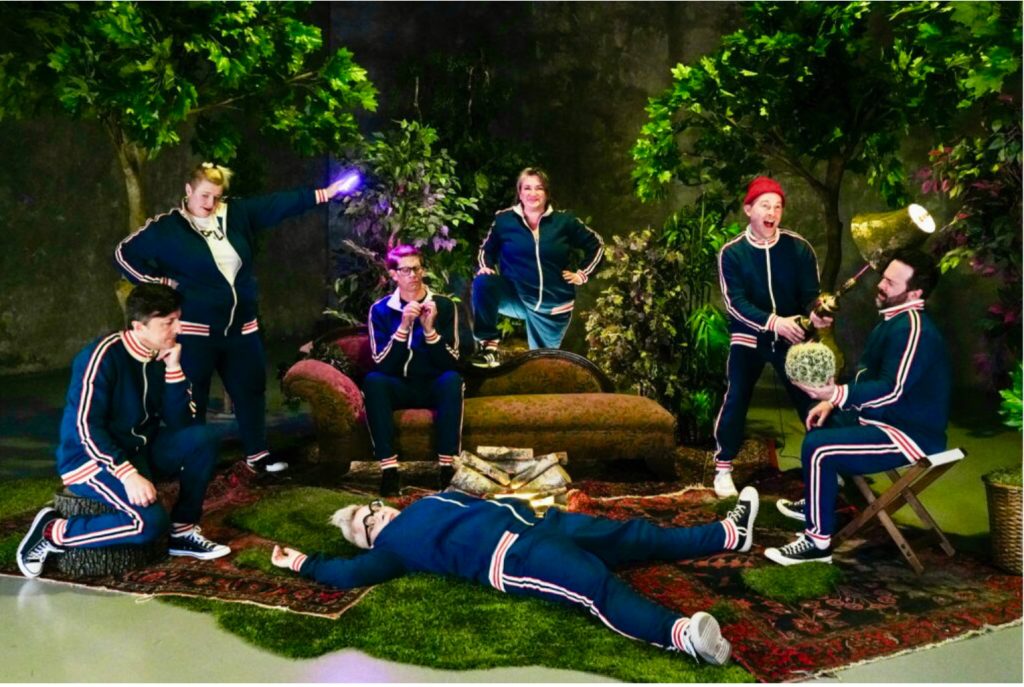
Matt Petraglia, Samantha Schmitz, Erin Rollman, Erik Edborg, Hannah Duggan, Evan Weissman and Brian Colonna pose during a photo shoot at Buntport Theater on Saturday, Dec. 6, 2025, in Denver, Colorado. The company has made it for 25 years performing only original plays in creates in collaboration, and is being recognized as the Denver Gazette True West Awards’ 2025 Colorado Theater ‘Person’ of the Year. (Rebecca Slezak/Special to The Denver Gazette)
After the laughter subsided, Petraglia dared to take on the same question.
“So this was a very large part of my beginning of life right after college, and it definitely shaped who I am,” he said. “Whenever I see stories about Buntport in the media, I’m extremely proud to say, ‘I used to work with them.’ I’m so glad I get to bring my kids to shows at Buntport. My parents still love to come. I’ve taken my daughter to see ‘The Lion King,’ but even more so, she wanted me to bring her back to Buntport to see ‘The Book Handlers’ a second time. She loved that show. I don’t know why. I mean – it’s so much talking!”
For the record: “The Book Handlers” was a satirical comedy about anti-intellectualism where quirky office workers took unread books from wealthy people and made them look well-worn, thus creating the illusion of the elite being cultured without the effort of actual reading. You know, a children’s story.
“We sent Matt a ransom note in the mail saying that if he didn’t donate money to our capital campaign, we were going to leak (an incriminating) photo of him to the lifestyle editor at the Greeley Tribune,” Rollman said. “And his daughter immediately was like, ‘Was that from Buntport?’ She wasn’t fooled at all.
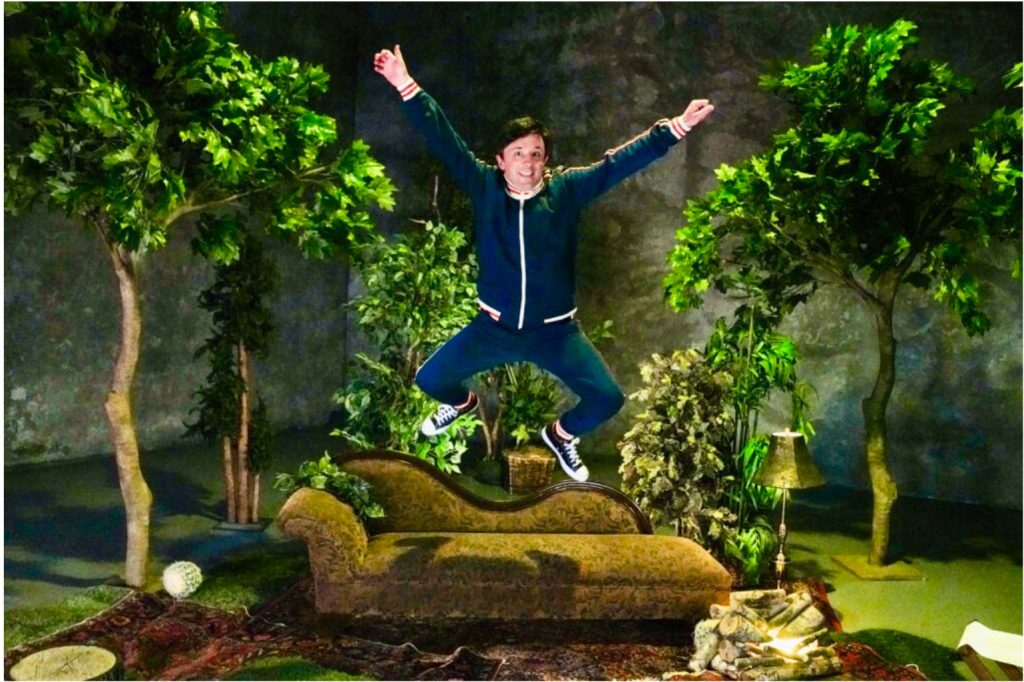
Founding Buntport Theater Company member Matt Petraglia returned Dec. 6, 2025, to join his pals in a photo shoot to commemorate the ensemble being newly named the Denver Gazette’s 2025 True West Awards Colorado ‘Person’ of the Year. (Rebecca Slezak/Special to The Denver Gazette)
When the seven original members of the Buntport collective gathered a few weeks ago for a photo shoot, we walked into the company’s newly expanded backstage space, which is already being used by other arts organizations, notably the Boulder Ensemble Theatre Company and Batala Colorado (the Denver chapter of a global Afro-Brazilian drum band).
The Buntporters weren’t told exactly why they were being asked to come here on a Saturday afternoon to take this group photo. But, no matter. True to their whimsical artistic inclinations, they devoted several days to carefully creating something of a Shakespearean forest in their new backstage space
-you know, to give the photographer an interesting visual landscape. To boot, they were all wearing matching track suits inspired by a local punk band called Spells.
It could not have been more appropriate that they anchored this arboreal setting with an anachronistic but highly practical couch, front and center. It wasn’t “the couch” that this team made into a character of its own many years ago when it staged a wildly popular ongoing sit-com satire of “Seinfeld” called “Magnets on the Fridge” that ran for years.
There’s just something about Buntport and couches that go together. Buntport has built its identity around its casual, intimate and accessible, couch-like vibe that reflects their non-traditional approach to just about everything.
The company doesn’t determine a fixed ticket price, instead encouraging audiences to pay whatever the spirit moves them to pay. If the seats are all
filled (as they often are), they make big, fluffy pillows available for overflow audiences to sit a little more comfortably on the floor. It’s a very basement vibe. Buntport is a place to chill, watch creative stuff without pretense and laugh.
There was a lot of laughter during this photo shoot. Within minutes, and without prompting, the gang was tossing Petraglia into the air for their amusement and the photographer’s pleasure, as if they had all seen each other yesterday.
As for being newly named the Colorado Theatre Person of the Year, the company seems genuinely touched because hopefully, Rollman said, that means it’s being a good neighbor. Everything about the “next phase” is tied into being a good community partner for all.
“It would not be as fun for us to get to take a step like this without bringing other people along with us,” Rollman said. “Frankly, I don’t imagine we’ll use the extra space for ourselves very much – if ever. But that other people get to use it makes us happy. Because we all know that there aren’t enough rehearsal spaces in this town. And we believe that thing. You know: ‘All boats rise,’ whatever that is.”
(Sorry, one last interjection: That’s “A rising tide lifts all boats.”) And, thanks to Buntport and its supporters: Boats are lifting.
Now, the plan is simply: Onward: “Stay the course,” said Duggan. “It’s all on track. Ten thousand points of light.”
Note: The Denver Gazette True West Awards, now in their 25th and final year, began as the Denver Post Ovation Awards in 2001. Denver Gazette Senior Arts Journalist john Moore celebrates the Colorado theater community throughout December by revisiting 31 good stories from the past year without categories or nominations.
John Moore December 31, 2025 The Denver Gazette

Buntport Theater is starting its 25th season with a lot of room to grow. The theater now has more than double the space available for rehearsals, storage and productions, thanks to a new deal in which it is leasing to own the building where it has been renting space for more than two decades.
Company members were surprised when a “For Sale or Lease” sign popped up in front of the building at 717 Lipan Street. The theater collective, which has been bolstering Denver’s theater scene since 2001 with quirky and original plays and musicals (like its upcoming revival of Edgar Allen Poe Is Dead and So Is My Cat), had tried in the past to purchase its part of the building without luck.
Company member Erin Rollman says that at one point, the group had the right of first refusal written into the contract so that if the landlord decided to sell the building, Buntport would have some protection and control over the situation. “It’s hard to be a renter,” Rollman laments. “We’ve been in the same space for 25 years, but you don’t feel total security. At any time, we could be moving somewhere else.”
That became a real possibility when a development company made an offer on the building. “We felt like they were going to raze the building and we were going to be kicked out,” Rollman says. “We were like, ‘We probably only have two years here at most if we let this happen,’ so we had to scramble and figure out a path to getting it ourselves.”
That path opened up with what Rollman calls an “angel investor” who bought the building as a stopgap; Buntport Theater is now leasing to own the building and just launched its 25th season with a five-year capital campaign to raise more than $2 million to support the purchase, renovations and other related costs.
Over $1 million of that goal was already raised before Buntport went public with the campaign, as company members reached out to individuals who had supported the group in the past. According to Rollman, the members plan to apply for grants as well, but “that process is just longer than being able to have conversations with individuals.”
The five members of Buntport are running the capital campaign to keep administrative costs minimal, allowing donations and grant funding to go directly to the purchase of the building.
Buntport Theater previously occupied about 3,500 square feet of the converted warehouse space just south of downtown Denver; now the company will take up the whole 10,000 square-foot building, with plans to add a rehearsal space for the community, more storage areas, a sewing room, a woodshop and more.
Kristen Fiore Oct 13th, 2025 Westword
On a weekday afternoon this spring, the building that’s home to Buntport Theater was alive with motion. Ensemble members were reassembling the set for “The Book Handlers,” a remount of its surreal 2018 play about office workers, while shouting jokes across the warehouse.
For a company best known for its zany, erudite comedies, like “The Death of Napoleon,” which imagines the former emperor refusing to get on his teeter-totter, or “Eyes Up, Mouth Agape,” a riotous send-up of the 2004 Dave Matthews Band Poopgate incident, it was a bit disorienting to sit down and talk seriously about space, scarcity and what it means to build something that lasted 25 years in a city that’s seen numerous other theater companies vanish.
Even though I was shown to a folding table — a fridge stocked with honor-system drinks and a cluster of chairs that normally serve as seating in the main theater nearby — it felt less like a business meeting and more like stepping into the communal living room of Denver’s most enduring theater collective.
“We were lucky to find the space when we did,” said Brian Colonna, one of the seven founding company members. “If we were an ensemble trying to find this space now, I think it would be out of our reach financially.”
Back when Buntport started performing shows in the empty warehouse space on Lipan Street in 2001, the company didn’t know they were securing an uncommonly stable rental agreement. Gaining a home didn’t just give the group a place to build sets or store costumes—it afforded them room for deep collaboration necessary to stage strange, specific work that can’t be rushed.
“It allows us to create the kind of theater that we create, which does require some experimentation,” said company member Erin Rollman. “We don’t do things in a traditional manner; we know what we want, but until we’re really in the space, putting it up, nothing’s set in stone. It would be difficult to make our shows if we only had five days in a rented space.”
The ensemble first formed in Colorado Springs at Colorado College in 1998, where they trained as generalists in theater— acting, directing, designing and writing together—which laid the groundwork for their all-hands-on-deck approach. When Colonna, Hannah Duggan, Erik Edborg, Rollman, SamAnTha Schmitz, Matt Petraglia and Evan Weissman relocated to Denver from the Springs, they weren’t searching for a traditional theater space with a fixed stage.
“We wanted something malleable,” Rollman recalled. “A big, open area we could reshape with every show. We were negotiating a space on Colfax and Marion, but that landlord wanted a morality clause—no nudity. We didn’t want to be nude, but we weren’t going to tell others what they could or couldn’t do on stage, so that deal broke down.”
A real estate agent led them to a newly built warehouse near what would become the Santa Fe Arts District, then a mostly industrial area with few cultural landmarks. “It had high ceilings, no windows, which sounds depressing, but it’s great for theater,” Rollman said. They’ve been leasing there ever since, and maintain a strong relationship with their landlords.
Now, 24 years into their collective experiment in ensemble-led theater-making in Denver, Buntport has created more than 50 original plays and over 100 episodes of live, collaboratively created sitcoms like “Starship Troy” and “Magnets on the Fridge.” They won a Mayor’s Award for Excellence in Arts & Culture in 2010 and have long been a critical darling of Denver’s creative scene.
But alongside their accolades and inventive productions, one of Buntport’s most impactful contributions may be how they’ve used their building. “We’ve opened up our space to other artists since the very beginning,” Rollman said. “We knew other people didn’t have space, so when we weren’t producing work, we wanted other people to be in the space.”
Over the years, they’ve hosted everything from art installations to comedy shows to experimental theater to workshops for DACA recipients to renew their paperwork to weddings. During the pandemic, when their programming slowed, they reduced rental rates from $250 per day to $50 per day.
“For a while, the space was free, but we had to charge a little bit to help cover our heating and cooling,” Rollman said. “It’s hard to be the people who throw up another barrier to somebody producing work. We joke, although it’s a true statement, we aren’t very good business people.”
“We are bad capitalists but okay business people,” Schmitz clarified.
“It’s been here for 25 years, so I guess the proof is in the pudding,” Rollman said. “But we’ve always said we don’t define success in the traditional American way, where it’s always up, up, up—we think plateauing is cool. We’re comfortable doing the work we love and making room for others to do the same.”
For small companies and solo artists used to hearing that other venues cost upwards of $300 a night, Buntport’s affordability can be a game-changer.
“While everything else has gotten more expensive in Denver, Buntport has stayed affordable,” said Ron S. Doyle, co-host of The Narrators. The live storytelling show, which loosely centers on a new theme every month, has been performing monthly at Buntport since 2014.
“There’s a huge need for more accessible venues in Denver like Buntport,” said Julie Rada of Grapefruit Lab, a local multimedia performance group that frequently stages its shows in the venue. “The team is great about working with artists with limited resources.”
What Buntport has maintained creatively is exceedingly rare. When Petraglia and Weissman left the company, The group chose not to replace them—partly out of practicality, as it allowed the current ensemble to stop working full time outside the company, partly out of creative cohesion.
“It would be hard for someone to join now,” Schmitz said. “We’ve worked together for so long, we have our own language.”
That intimacy, though artistically potent, can present hurdles. “Buntport is a company that’s been around for a long time, making incredibly innovative work that’s better than 90% of theaters in this town” said Regan Linton, a theater artist who uses a wheelchair and worked with the group on “The Menagerist.” But, “working with the ensemble was a really rewarding experience, but figuring out the best way to collaborate took some time.”
Post-pandemic, Buntport’s efforts to open space to others have only intensified. “A way to address diversity is to stay out of artists’ way and let them have space to have their voices heard,” Colonna said. “Our ensemble works with others, but we aren’t casting people.”
These days, Buntport is operating near capacity. Most weekends are booked, and cancellations are rare. “We are pretty booked up, which is the sad part,” Rollman said. “We have a list of people who, if there are any cancellations, want to make stuff.”
That demand is both validating and daunting, especially given the group’s limited capacity to grow as renters in the space. Their rental calendar is a balancing act between their own shows and guest productions.
And while they’ve made their warehouse feel like a permanent home, the reality is more fragile: they’re still renters. Despite a strong relationship with their landlords, a change in ownership or circumstance could upend everything, forcing the company back into the kind of nomadic model they started with more than two decades ago. It’s a possibility they’ve begun to consider seriously.
“Our ability to build in the space and make shows is a pillar of our working style, but it’s not a luxury that a lot of others have,” Colonna said. “If we didn’t have this space—it’s kind of bleak to think about. We’d try to give it a go, but it would be a major difference. Other people have scaled for that in the way they approached their process, but it would be difficult for us at this point in our careers to make a change like that.”
Toni Tresca July 17, 2025 Bonfils-Stanton Foundation
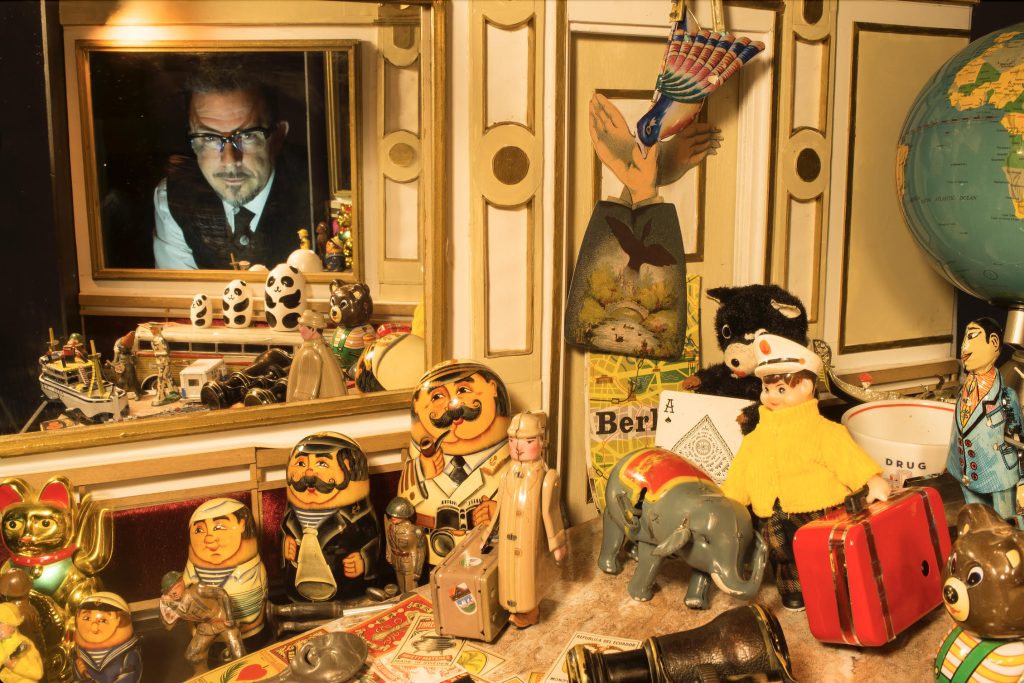
Our friend Thaddeus Phillips (Lost Soles, The Archivist, 17 Border Crossings, and more) is coming back to Denver! Get Tickets Here!
(more…)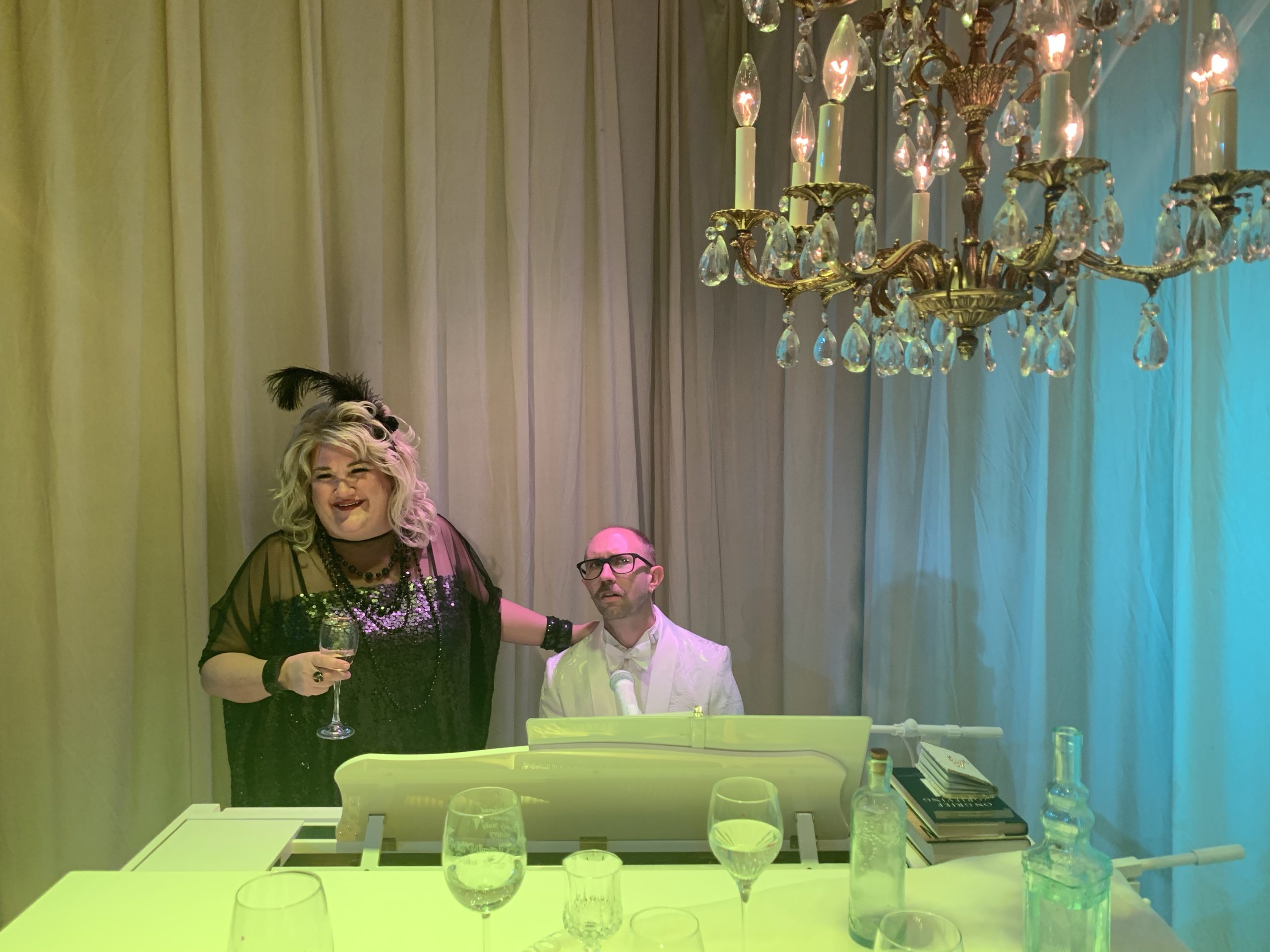
Hybrid event- Both in-person at Buntport and on Zoom/Facebook Live.
On Dec 2nd join Artemisia and Nathan as they sing impromptu songs. Maybe another special guest will show up. You’ll have to tune in to find out. This is in conjunction with our end-of-season fundraiser. Any amount helps!

Our friend Ron Doyle from The Narrators is hosting a t-shirt fundraiser for Buntport!
These unisex shirts will be screenprinted by hand, so every one is unique. Ron is only making 50 shirts for this fundraiser, so these are a rare treat. They will be printed on super-soft Bella + Canvas shirts made of 100% combed and ring-spun cotton.
The deadline to pre-order is December 1st. The shirts will be delivered or available for pickup later in December.
We designed the artwork, which is inspired by our costumes from the Public Domain Theater Festival.
Sizes: XS, S, M, L, XL, 2XL, 3XL, 4XL
Colors: Turquoise, Charity Pink, Synthetic Green, Heather Storm (Heathered Dun Gray), White
(Note: Colors may vary from sample images)
HERE’S HOW TO ORDER:
Any questions? Don’t see the size or color you really want? Would you rather have one of our Rooster shirts or “Look Out For Each Other” shirts instead? Want something screenprinted other than a shirt?
Just email Ron and ask!
Buntport Performs stories of high school life- hilarious, harrowing and heart felt! Would you ever want to go back?
Postponed! New Date January 30th 2pm In-person at Su Teatro
February 4th 7pm- Virtual
Tickets $22
Apparently the Victorians originated Christmas cards so we’re going all in this holiday season…We’ve adapted a creepy Victorian card and invite you to join us virtually for some silly Victorian parlor games. Celebrate with us via Zoom on Colorado Gives Day with some good old fashioned nonsense.
If you can afford to donate for Colorado Gives Day, we appreciate the support. We’ve got virtual programming coming soon and have plans to make another Covid-safe outdoor show for the spring. We promise we’ll put donations to good use! Colorado Gives Day is one-stop shopping for your favorite Colorado-based non-profits, your donation will be increased by an incentive fund, and you don’t have to live in Colorado to participate.
Schedule a donation now at ColoradoGives.org/buntport
(more…)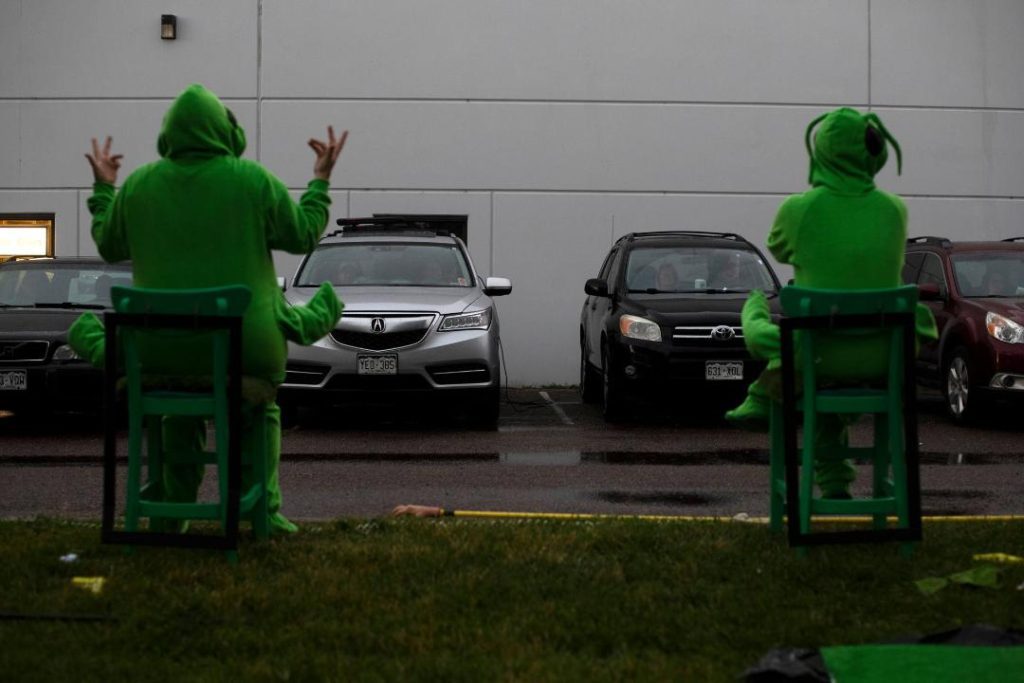
Photo: Members of Denver’s Buntport Theater, thinking drive-in theater would be pandemic-proof, tried to imagine what kind of creatures belong on a lawn. Their solution: “The Grasshoppers.” Credit…Rachel Woolf for The New York Times
Inside a former firehouse in Richmond, Va., a lone actor performs “The Picture of Dorian Gray” for audiences as small as two. In a Denver parking lot, theatergoers in cars watch, through their windshields, four performers costumed as grasshoppers. On a 600-acre property in Arkansas, a cast of about 130 re-enacts the story of Jesus for several hundred ticket-holders spread across a 4,000-seat outdoor amphitheater.
The coronavirus pandemic has shuttered Broadway through the end of the year (at least), and the nation’s big regional theaters and major outdoor festivals have mostly pivoted to streaming. But even as infections surge in the United States, many theaters are finding ways to present live performances before live audiences.
Of course, there is social distancing. Also, in some places, masks. Temperature checks. Touchless ticketing. Intermissionless shows. And lots of disinfectant. At the Footlights Theater, in Falmouth, Maine, actors will perform behind plexiglass.
But these precautions mean there is dinner theater in Florida. Street theater in Chicago. Drive-in theater in Iowa.
“Our commitment is to do live theater — there’s a huge difference between that and seeing something on a computer screen,” said Susan Claassen, managing artistic director of Invisible Theater in Tucson, Ariz., a state that has emerged as a Covid-19 hot spot. The theater, which has been running a four-character play called “Filming O’Keefe” indoors, installed an air ionizer, allowed patrons in only one-quarter of its seats, mandated that they wear masks, and put on a show.
“Our theater got its name from the invisible energy that flows between performers and the audience,” Claassen said. “Even with 22 people in the audience with masks on, that energy is so strong.”
There are also financial reasons for continuing: Some theaters say they cannot survive a year without revenue.
“We’d rather go down creating good theater than die the slow death behind our desks,” said Bryan Fonseca, the producing director of Fonseca Theater Company in Indianapolis. The company plans to stage “Hype Man,” a three-character play by Idris Goodwin, outdoors, for 65 mask-wearing patrons. “I am hopeful and also very cautious,” Fonseca said, “careful that I don’t create a problem.”
By putting on shows, some theater artists are, in effect, making the case that it is a mistake for the industry to wait for New York to lead the way, given the risks there. “Someone has to be the first to take that cautious step into the dark to see what works and what doesn’t,” said Phil Kenny, a sometime Broadway producer who has a role in “Willy Wonka” in Orem, Utah.
But even in New York City there are signs of theatrical life. Food for Thought Productions, a company that presents staged readings of one-act plays, is planning to restart in a private club on July 13, with Louise Lasser and Bob Dishy performing and attendees required to have taken coronavirus tests.
“If we can prove that we can do this safely, maybe other groups can do safe theater as well,” said Susan Charlotte, the founding artistic director.
The pandemic remains a concern for any of the planned productions.
In Fort Myers, Fla., the Broadway Palm Dinner Theater postponed “The Sound of Music” as the number of confirmed cases surged in that state. In Houston, Theater Suburbia canceled “Daddy’s Dyin’ Who’s Got the Will?” citing a local stay-at-home advisory. And in Salt Lake City, where the Grand Theater was planning a run of “To Kill a Mockingbird” in which all the performers were masked, the theater scuttled the production just four nights before it was to begin, citing rising local caseloads.
But many are persisting. In Jacksonville, Fla., even as the mayor imposed an indoor mask order, the Alhambra dinner theater is continuing to stage “Cinderella.” The theater is selling only 50 percent of its seats; it has installed plexiglass between its seating tiers; patrons must wear masks after they eat; performers wear gloves and face away from each other during any partnered dancing; and, at the end, Cinderella and the Prince share an elbow bump instead of a kiss. (The audience invariably laughs.)
“I feel very comfortable, and I’m definitely not worried about my health,” said Olivia Zeisloft, 18, who is playing the title role (and whose grandfather is the director). “It’s been an amazing experience.”
Actors’ Equity Association has barred its members from performing onstage, and the Alhambra is one of several theaters that have adjusted as a result, deciding for the first time in years to use nonunion actors.
The Salt Lake City production of “Mockingbird” recast the role of Atticus Finch after an Equity actor would not perform. And in western Virginia, the American Shakespeare Center, which normally has both Equity and non-Equity companies, is planning to use only its nonunion performers this summer.
Equity is not happy, and warning that “moving forward, we will shine a spotlight on theaters that decide to make the reckless and irresponsible choice to put the safety of their audience and workers at risk,” according to Mary McColl, the union’s executive director.
Summer is beautiful. But this summer is strange.
Denver’s Buntport Theater, which usually presents work in a 100-seat warehouse, decided to create outdoors, and, like several other theater companies around the nation, looked to the drive-in for inspiration. The result: “The Grasshoppers,” in which four actors wearing adapted onesies perform an isolation-themed piece for patrons in cars. “It both feels like you’re doing theater and not like you’re doing theater,” said Erin Rollman, a company member.
Then there is street theater, getting a new look from artists idled by the pandemic. In Chicago, the ad hoc collective Random Acts of Theater dons costumes to perform for passers-by some weekends. They dressed as seniors, carrying babies, in a work called “The Future is Watching Us,” and marked Juneteenth in oversized masks. Up next: something involving large bird puppets.
“This is a time when everyone feels frightened and weird,” said one of the organizers, Jessica Thebus, who runs the graduate directing program at Northwestern University. “Bringing art to people walking down the street feels really important.”
But there are also pageant-scale productions — big casts, lots of seats — underway in outdoor venues, including the Medora Musical in North Dakota, the Shepherd of the Hills Outdoor Dramain Branson, Mo., and the Great Passion Play in Eureka Springs, Ark.
“It’s been a bit of a challenge to do a play in the middle of a pandemic,” said Kent Butler, who stars as Jesus on Friday nights in Arkansas, and who also leads tours and serves as the production’s spokesman. Attendance, he said, is down, reflecting a decline in tourism and the disappearance of large travel groups.
The Great Passion Play, which has been running seasonally since 1968, takes place on a 500-foot-wide, three-tiered stage, making social distancing easier for actors; all but Jesus are also costumed with face coverings whenever their characters are not speaking.
“When I was playing Jesus last Friday night, a little girl, probably age 3, came up to me and wanted to be picked up,” Butler said. “It doesn’t look good if Jesus ignores a child, and I knew that, but also knew that for her health and safety and my own, it is very wise to use hand sanitizer. So I grabbed her hand in mine and walked her off the set all the way to where I knew there was hand sanitizer available, and was able to clean my hands and made her clean hers as well.”
The American Shakespeare Center will rotate “Othello” and “Twelfth Night” between indoor and outdoor stages, so audiences can choose where they are most comfortable. The acting company has agreed to an “isolation covenant.” And there are few virus cases in the theater’s Shenandoah Valley region.
“We got lucky in terms of geography,” said Ethan McSweeny, the theater’s artistic director. “That gives us an obligation to see if we can try and chart a course.”
There are clearly willing audience members. “Theater is something you crave,” said Jackie Schmillen, an Iowa television anchor who went to see a drive-in production of “Love Letters” in the Des Moines Playhouse parking lot. And Joel Bassin, the producing artistic director of the Firehouse Theater in Richmond, said his productions of “Dorian Gray” are selling out — albeit for audiences of only two, four or six people. “People do want to go out if we can assure them we’re controlling the risk,” he said.
A clutch of actors, draped in white, ran, leapt and danced around an outdoor basketball court in Claverack, N.Y., one recent night, recounting their dreams and re-enacting their visions.
Instead of footlights, there were the beams of headlights surrounding the makeshift stage. Inside the cars were audience members, listening to dialogue and music over their cellphones and radios.
That scene was near the end of a particularly ambitious example of pandemic-prompted experimentation: The director Michael Arden, a two-time Tony nominee, brought 33 theater artists together in New York’s Hudson Valley to develop a piece called “American Dream Study.”
For a few invitation-only run-throughs, masked audience members traveled by car and on foot from scene to scene — watching a woman in a floating canoe, a couple at a condemned mill, dancers at an abandoned oil tank, and the whole ensemble emerging from the woods to sing around a fire pit. They remained distant from the actors and one another.
The company, including the Tony winner Nikki M. James (“The Book of Mormon”), developed the piece while quarantining, with a nurse, at an inn; they remain hopeful but uncertain about whether the show will have a full production.
“We were finding a new mode of storytelling out of an obstacle,” Arden said, “and it really felt incredible.”
Michael Paulson July 4th, 2020 New York Times